Weight Management as a Longevity Strategy: Where Metformin and GLP-1s Intersect

Weight Management and Aging Are Tightly Linked. Carrying excess weight over long periods is associated with insulin resistance and disrupted metabolic signaling. These processes tend to show up more often as people age, but they don’t wait for old age to begin. They build quietly. Sometimes for decades.
Weight gain isn’t always driven by overeating alone. Hormonal shifts, reduced insulin sensitivity, and changes in muscle mass all play a role. So do medications, sleep quality, and stress. When weight management strategies ignore these factors, results are usually short-lived.

Longevity-focused weight management looks different. The aim is not aggressive restriction. The aim is metabolic stability. That includes maintaining healthier glucose control, avoiding repeated weight cycling, and supporting pathways that influence cellular stress and inflammation.
This is where Metformin weight loss discussions often start. And where GLP-1s have entered the picture in a more structured way.
Metformin for Weight Reduction: What’s Actually Going On
Metformin has been prescribed for decades, primarily for type 2 diabetes. Its role in weight management is more subtle. Most people do not experience dramatic weight loss. Instead, weight changes tend to be modest and gradual.
That gradual effect is part of why Metformin has drawn interest in longevity research. The medication reduces glucose production in the liver and improves insulin sensitivity in peripheral tissues. When insulin signaling improves, the body may store less excess energy as fat over time.
Metformin weight loss tends to show up in people with insulin resistance or metabolic dysfunction. In those cases, appetite regulation may improve indirectly. Energy utilization becomes more efficient. Blood sugar swings may smooth out.
Metformin for weight reduction is often misunderstood because expectations are misplaced. Metformin does not suppress appetite in the same way GLP-1 therapies do. It does not override hunger signals. It works upstream, influencing metabolic processes that affect how calories are handled.
GLP-1 Dose for Weight Loss
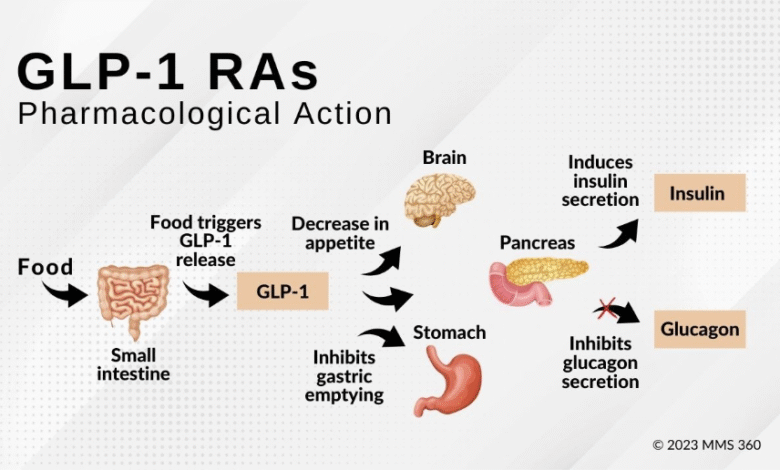
GLP-1 medications work through a separate pathway. These drugs mimic the action of glucagon-like peptide-1, a hormone involved in appetite regulation, gastric emptying, and insulin secretion.
The most noticeable effectsare reduced appetite and cravings. People feel full sooner. Meals become smaller. Snacking often decreases without intentional restriction. Over time, calorie intake drops.
GLP-1 dose for weight loss is not a one-size approach. Higher doses are associated with stronger appetite suppression, but also higher rates of intolerance. More recently, microdosing strategies have gained attention. These approaches use lower doses aimed at improving metabolic signaling without overwhelming appetite suppression.
For longevity-minded individuals, this matters. Rapid weight loss can sometimes lead to muscle loss, nutrient gaps, or metabolic slowdown. Slower, controlled reductions may help preserve lean mass and metabolic health.
GLP-1s also influence insulin sensitivity and glucose regulation, which places them closer to Metformin than many people realize. The overlap isn’t complete, but the shared focus on metabolic pathways creates a point of convergence.
Where Metformin and GLP-1s Intersect
The intersection happens at metabolism and inflammation. Both therapies influence insulin signaling. Both may help reduce the metabolic strain associated with excess weight. Both may reduce chronic inflammation. Neither is primarily about willpower or calorie counting.
Metformin weight loss tends to be indirect and gradual. GLP-1 weight loss tends to be appetite-driven and more visible early on. Together, they address different layers of the same problem.
Some clinicians view Metformin as foundational metabolic support. GLP-1s then adjust energy intake on top of that foundation. The idea is not stacking effects for speed but aligning mechanisms for stability.
There is also interest in how these medications may influence inflammation markers and oxidative stress. Excess adipose tissue is metabolically active and may contribute to inflammatory signaling. Reducing that burden, even modestly, may support healthier aging trajectories.
Not everyone needs both. Some benefit from one alone. The key is matching the approach to the individual’s metabolic profile rather than chasing the most aggressive outcome.
Why Precision and Oversight Matter
This is where companies like AgelessRx come into the conversation in a practical way. Weight management programs tied to Metformin and GLP-1s require more than access to a prescription. They require confirmation that the medication is authentic, properly compounded when applicable, and dosed with medical supervision.
AgelessRx approaches weight management with an emphasis on metabolic context. Metformin protocols are paired with ongoing medical oversight rather than treated as a one-time intervention. Dosages are monitored. Patient data is collected and analyzed in real-time.Adjustments are based on response, not guesswork. That matters when the goal extends beyond short-term weight change and into longer-term health support.
This type of structure helps reduce misuse and supports consistency. It also reinforces that Metformin weight loss and GLP-1 strategies are medical tools, not lifestyle shortcuts.
Weight Management as a Long Game
Metformin for weight reduction does not push the system aggressively. GLP-1 dose for weight loss adds another layer, one that directly influences intake and satiety.
Used thoughtfully, these tools may complement each other, or medical guidance may suggest using one but not the other. As part of a broader metabolic strategy that includes nutrition, movement, and sleep.
People often ask what happens if weight management is ignored. The answer is usually slow accumulation of metabolic strain. Over years, that strain compounds. Addressing it earlier, with measured interventions, may help preserve function later in life
Weight management has moved beyond aesthetics. The discussion of Metformin and GLP-1s reflects a shift toward metabolic health as a pillar of longevity planning.
Metformin weight loss tends to be subtle but meaningful over time. GLP-1 therapies reshape appetite and intake. Both weight management therapies highlight that sustainable weight management is not about force. It’s about alignment.
Alignment with metabolism. Alignment with long-term goals, and alignment with medical oversight that treats weight as one part of a much larger health picture.
