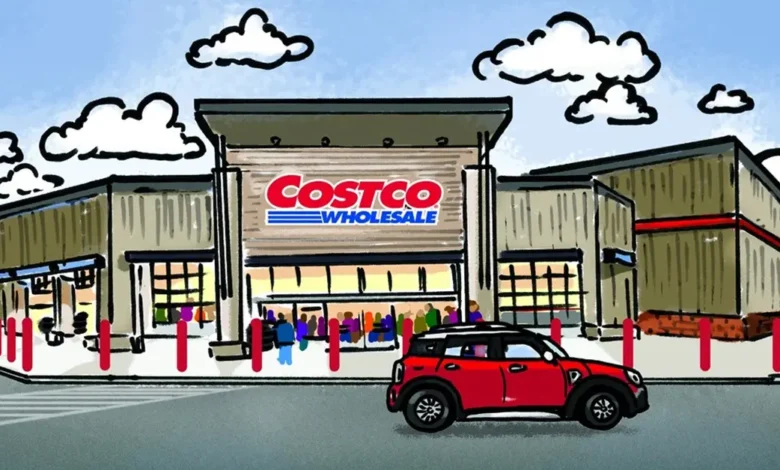
The phrase costco stock split is suddenly everywhere, lighting up search trends, investor forums, and financial news feeds across the United States. Longtime shareholders are watching closely, while new investors are wondering if this could be their moment to step in. Stock splits often arrive at emotional market crossroads, signaling confidence, momentum, and growth. And when a retail giant with a fiercely loyal customer base enters the conversation, Wall Street pays attention. The buzz is real, the curiosity is rising, and the implications could stretch far beyond a simple numbers game.
Why the Costco stock split conversation is trending right now
The renewed focus on a potential costco stock split is not random. It’s driven by a mix of soaring share prices, strong earnings momentum, and a broader market fascination with high-performing blue-chip stocks. Over the past year, investor interest in accessible share pricing has grown, especially as retail participation in the stock market continues to expand. When a stock climbs into higher price ranges, the idea of a split naturally enters the conversation, even if no official announcement has been made.


Adding fuel to the discussion is the consistent performance of Costco Wholesale Corporation. The company’s steady revenue growth, resilient membership model, and disciplined cost control have kept it in the spotlight. Market analysts often note that while a stock split does not change fundamentals, it can dramatically shift perception. That psychological factor is a major reason why the costco stock split topic is gaining momentum now.
Understanding what a Costco stock split actually means
At its core, a costco stock split would increase the number of outstanding shares while proportionally reducing the price per share. For example, in a hypothetical 2-for-1 split, each shareholder would own twice as many shares, each priced at half the original value. The total investment value remains unchanged, but the optics are different. Lower per-share prices often feel more approachable, particularly for retail investors who buy individual shares rather than fractional ones.
Historically, stock splits are often interpreted as a sign of corporate confidence. Companies typically consider them after sustained price appreciation and stable financial performance. While there is no guarantee that a costco stock split will happen, understanding the mechanics helps investors separate emotion from economics. The fundamentals, such as earnings, cash flow, and market position, remain the real drivers of long-term value.
Costco’s financial performance fueling split speculation
Strong financial results are a major reason the costco stock split discussion refuses to fade. The company has consistently posted solid quarterly earnings, driven by high renewal rates, strong private-label sales, and steady foot traffic across its warehouses. Unlike many retailers, Costco thrives on thin margins but massive volume, a strategy that has proven remarkably resilient during economic uncertainty.
This financial consistency has pushed the stock price higher over time, which naturally sparks split speculation. Analysts point out that Costco’s valuation reflects investor confidence in its long-term growth story rather than short-term hype. When earnings growth aligns with market optimism, stock splits often become part of the narrative. That alignment is exactly what keeps the costco stock split question alive in market conversations.
How a Costco stock split could impact retail investors
For everyday investors, a potential costco stock split carries more psychological weight than financial impact. Lower share prices can make the stock feel more accessible, especially for new market participants. This perceived affordability often increases trading volume, which can boost liquidity and short-term interest. While nothing fundamentally changes, market behavior often does.
Retail investors also tend to view stock splits as positive signals, even though seasoned analysts caution against reading too much into them. The real appeal lies in accessibility and sentiment. If a costco stock split were announced, it could attract a wave of first-time buyers eager to own shares of a trusted American retail brand. That surge in interest can sometimes create momentum, at least in the near term.
Historical perspective on Costco and stock splits
Looking back, Costco has executed stock splits in the past, typically during periods of sustained growth and rising share prices. These historical moves often coincided with expanding warehouse footprints, strong membership growth, and improving profitability. While past behavior never guarantees future action, it does provide context for current speculation around a costco stock split.
Market historians note that companies with long-term growth strategies sometimes use splits to maintain a “comfortable” trading range. This approach can support broader ownership and keep the stock aligned with investor expectations. Whether Costco chooses to repeat that strategy remains uncertain, but history explains why the idea feels plausible rather than far-fetched.
Wall Street reactions and analyst expectations
Analyst commentary around the costco stock split topic has been measured but attentive. Most professionals emphasize that a split would not alter the company’s intrinsic value. However, they also acknowledge the potential for increased retail participation and short-term enthusiasm. On Wall Street, perception often influences momentum, even when fundamentals remain unchanged.
Some analysts suggest that management will prioritize operational performance over cosmetic market moves. Others believe that if the share price continues to climb, a split could eventually make strategic sense. The consensus is cautious optimism, with experts urging investors to focus on earnings growth, dividends, and long-term strategy rather than split speculation alone.
Broader market trends influencing the split narrative
The costco stock split discussion is also shaped by broader market dynamics. In recent years, several high-profile U.S. companies have announced stock splits amid strong performance, reigniting investor interest in the concept. These moves often align with bullish market cycles, rising consumer confidence, and increased retail trading activity.
Additionally, the growth of commission-free trading platforms has made stock ownership more accessible, amplifying the psychological impact of share prices. In this environment, a costco stock split feels culturally relevant, even if it remains hypothetical. Market sentiment, not just balance sheets, plays a powerful role in shaping these narratives.
Future outlook and what investors should watch next
Looking ahead, the future of the costco stock split conversation will likely depend on continued financial performance and market conditions. Investors should monitor quarterly earnings, membership growth, and expansion plans, as these factors often influence corporate decisions. Any official hint from management would instantly shift speculation into confirmation.
While a split could generate short-term excitement, long-term investors are better served by focusing on fundamentals like revenue growth, dividend consistency, and competitive positioning. Whether or not a costco stock split happens, the company’s underlying business strength remains the real story.
The buzz around the costco stock split is a reminder of how emotion, perception, and performance intersect in financial markets. If you want to stay ahead of the conversation, now is the time to follow earnings updates, analyst insights, and market trends closely. Share your thoughts, join the discussion, and keep watching this space as the story continues to unfold.