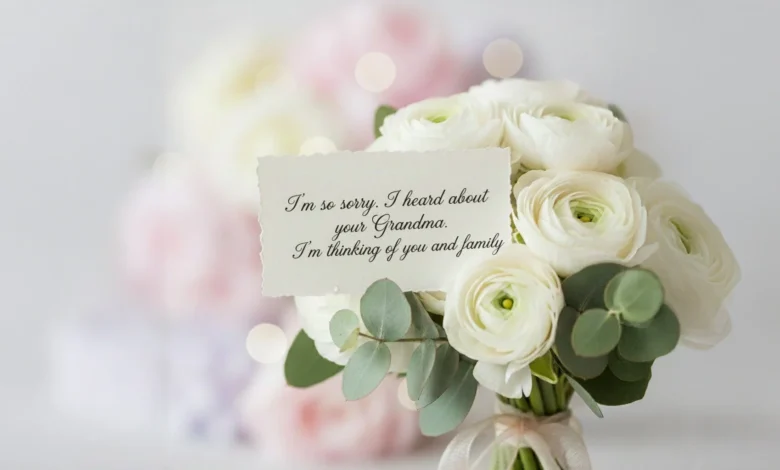
In moments of loss, words often fail. Yet millions of Americans still reach for them, searching for something small but meaningful to say when grief hits close to home. In recent weeks, the phrase short condolence message has surged across searches, social feeds, and news platforms, reflecting a quiet shift in how people express sympathy. From sudden celebrity deaths to personal tragedies shared online, the need to respond quickly—but thoughtfully—has never felt more urgent. This isn’t just about etiquette. It’s about connection in an era where a few words can travel instantly, offering comfort when silence feels too heavy.
Why the Short Condolence Message Is Suddenly Everywhere
The growing popularity of the short condolence message is closely tied to how Americans now experience grief in public. News of loss spreads faster than ever through social media, text alerts, and group chats. When a tragedy breaks, people want to acknowledge it immediately, but long-form letters often feel out of place or overwhelming. A concise, sincere line has become the preferred way to show presence without intruding. According to recent digital communication studies, brief sympathy notes are shared nearly twice as often as longer messages during breaking news events.


Cultural shifts also play a role. In the United States, conversations about mental health and emotional boundaries are more open than a decade ago. Many people worry about saying the “wrong” thing, so they opt for a short condolence message that feels safe, respectful, and universally appropriate. These messages are seen as less performative and more genuine. In a time when public responses are often scrutinized, brevity offers protection while still honoring the moment of loss.
How Social Media Changed the Language of Sympathy
Platforms like Facebook, Instagram, and X have reshaped how condolences are delivered. When someone posts about a death, hundreds of responses can appear within minutes. In that environment, the short condolence message has become the dominant format. Simple phrases of sympathy fit naturally into comment sections and stories, making them easy to read on mobile screens. Data from social media analytics firms shows that posts with concise condolence text receive higher engagement than longer replies during periods of mourning.
This shift has also influenced emotional expectations. A short condolence message is no longer seen as cold or dismissive. Instead, it signals awareness and respect, especially when paired with timing and sincerity. Many Americans now believe that showing up promptly matters more than crafting a perfect paragraph. As a result, the language of grief online has become more minimal, but not less meaningful. The power lies in acknowledgment, not length.
What Makes a Short Condolence Message Feel Genuine
Not all brief messages carry the same weight. The effectiveness of a short condolence message depends on tone, word choice, and context. Messages that focus on empathy rather than explanations tend to resonate more deeply. Avoiding clichés and overly religious language, unless appropriate, is another key factor. Experts in grief communication suggest that acknowledging the loss directly and expressing care is often enough to make someone feel seen during a painful moment.
Personalization also matters, even in a few words. Adding the person’s name or referencing the relationship can transform a generic condolence text into something heartfelt. In the United States, where diverse cultural and religious backgrounds shape mourning practices, flexibility is crucial. A short condolence message works best when it leaves space for the bereaved to feel supported without pressure to respond or engage further.
The Role of Timing in Modern Condolence Messages
Timing has become just as important as wording. In today’s fast-paced news cycle, sending a short condolence message soon after learning of a loss is often interpreted as a sign of genuine care. Studies on digital empathy show that early responses help reduce feelings of isolation among grieving individuals, particularly when the loss is publicly shared. Waiting too long, even with good intentions, can make messages feel disconnected from the moment.
However, timing also requires sensitivity. While quick responses are valued, piling on during the immediate shock phase can feel overwhelming. Many Americans now choose to send an initial short condolence message, followed by a more thoughtful note later. This two-step approach balances immediacy with depth, reflecting a more nuanced understanding of grief in the digital age.
Why Americans Prefer Brevity During Public Grief
Public mourning has become more common, but it is also more complex. When tragedies dominate headlines or communities experience collective loss, people are exposed to grief on a large scale. In these moments, the short condolence message offers a way to participate without emotional exhaustion. It allows individuals to express solidarity while preserving their own mental health, a growing priority in American culture.
There is also a practical aspect. Mobile-first communication favors short sentences and clear language. Long messages are often skimmed or skipped entirely. A short condolence message fits naturally into how people read and respond on their phones. As attention spans shrink and notifications pile up, brevity becomes not just a preference, but a necessity for meaningful engagement.
Trends, Stats, and the Future of Condolence Communication
Search data from the past year shows a steady increase in queries related to condolence text and sympathy messages, with spikes following major news events. Communication experts predict that the short condolence message will continue to dominate, especially as artificial intelligence and predictive text tools influence how people write. Templates and suggested phrases are becoming more common, making it easier to respond quickly during emotional moments.
Looking ahead, personalization is expected to be the next frontier. Even short messages will likely become more tailored, reflecting shared memories or specific relationships. As Americans navigate an increasingly digital emotional landscape, the challenge will be maintaining authenticity. The future of condolence communication will depend on balancing efficiency with empathy, ensuring that even the briefest words still carry human warmth.
What This Shift Says About Grief in America Today
The rise of the short condolence message reveals more than a communication trend. It highlights how Americans are redefining presence, support, and respect in times of loss. Grief is no longer confined to private spaces; it unfolds across screens and timelines. In response, people are adapting their language to meet the moment, choosing words that are simple, sincere, and accessible.
This evolution does not diminish the depth of sympathy. Instead, it reflects a collective effort to stay connected in a fast-moving world. A short condolence message may be brief, but when sent with intention, it can still offer comfort. As the nation continues to navigate public and personal loss, these small expressions of care will remain a powerful part of how Americans show up for one another.
If this topic resonated with you, share your thoughts or experiences in the comments and explore how thoughtful words, even a few, can make a difference in moments that matter most.